



Health · 13 min read
What does a sauna actually do? Benefits for health, body, skin and wellbeing
We look at what science says about sauna's effects on the heart, brain, skin, recovery and wellbeing – and what a sauna really doesn't do.
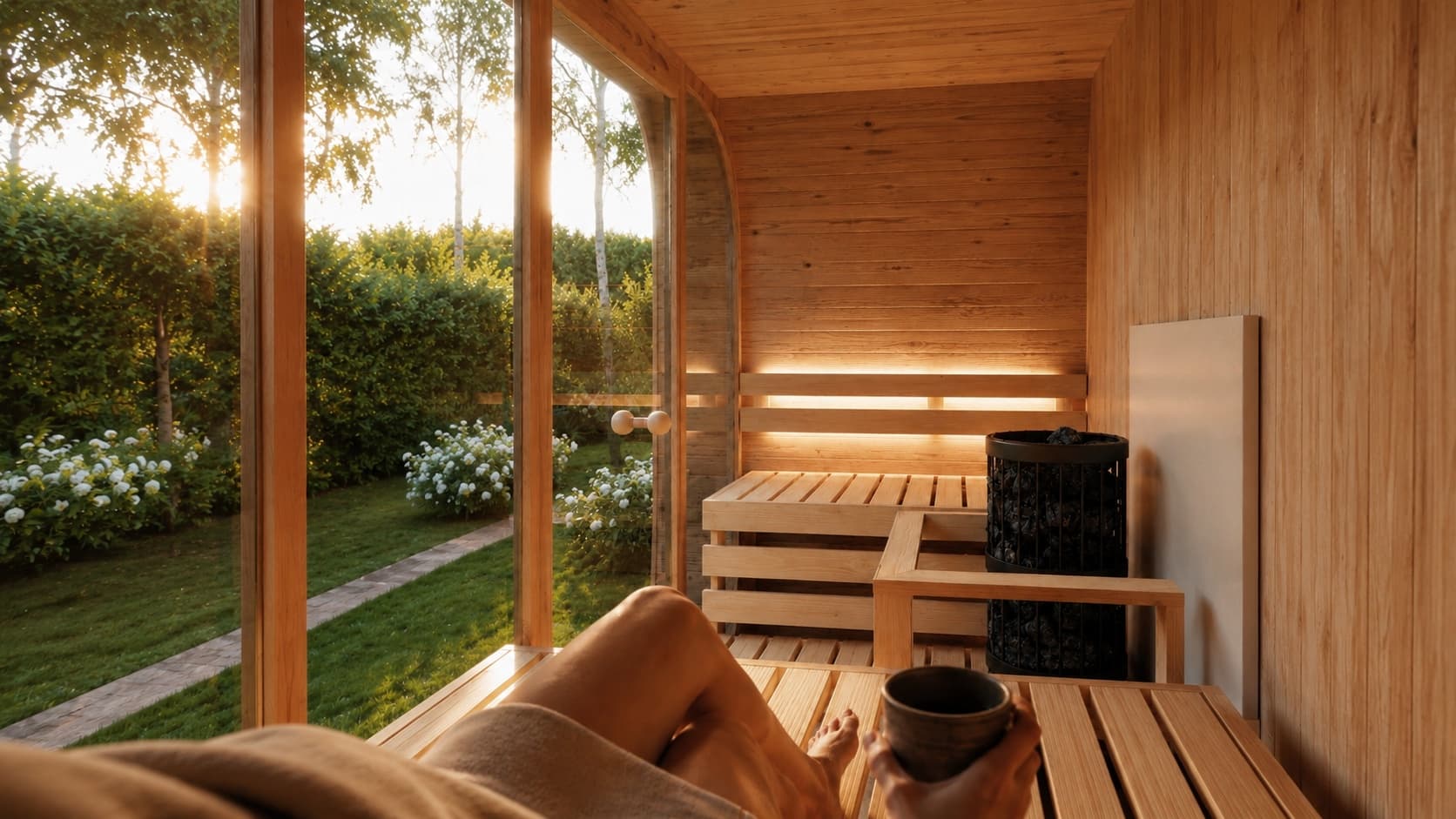
Just a decade or so ago, a sauna mostly brought to mind a swimming pool, a hotel, or a trip to a spa. Today it's showing up more and more often in sports clubs, homes and gardens. And it's not just about fashion.
The sauna is one of the more interesting examples of something remarkably simple triggering an entire cascade of physiological responses in the body. We step into a hot room, sit down, and essentially do nothing. Meanwhile, the heart starts working faster, blood vessels dilate, blood flow to the skin increases, we start sweating heavily, and the body activates the mechanisms responsible for coping with heat stress.
What's even more interesting is that regular sauna use has been the subject of scientific research for years. A particularly large share of the data comes from Finland, where the sauna isn't a luxury add-on to a hotel spa, but an everyday part of life.
And it's precisely this research that shows the sauna can be something far more than a pleasant way to spend an evening.
 The sauna is controlled stress for the body
To understand how the sauna works, we need to start with a paradox. High temperature is a stressor for our body.
Except that, with sensible sauna use, it's a short-term, controlled stressor.
The body tries to maintain its normal temperature. It dilates the blood vessels close to the skin's surface, increases blood flow and triggers intense sweating. The heart speeds up because it needs to pump more blood.
It's a bit like a short workout for the mechanisms responsible for thermoregulation and circulation.
The scientific literature often brings up the concept of hormesis here. It describes a situation where moderate stress activates the body's adaptive mechanisms. We see a similar phenomenon during physical training. The workout itself is a load, but dosed correctly, it makes the body progressively stronger and better prepared for the next load.
Of course, the sauna doesn't replace physical activity. But it can be a genuinely interesting complement to it.
The heart and blood vessels are probably the biggest winners
This is where some of the strongest arguments for regular sauna use come in.
Under high heat, blood vessels dilate, blood flow to the skin rises sharply, and heart rate can climb noticeably. Once the session ends, blood pressure can drop.
Over the longer term, regular heat exposure is being studied for its effects on arterial blood pressure, vascular endothelial function and arterial elasticity, among other things. Research reviews point to a potentially beneficial effect of sauna use on the cardiovascular system, although not every study shows an identical effect.
Even more interesting are the decades-long Finnish observational studies.
In one of the better-known studies, more than 2,300 middle-aged men were followed for around 20 years. Sauna users were more likely to have a lower risk of sudden cardiac death, fatal coronary heart disease, death from cardiovascular disease, and death from any cause. The strongest associations were seen in the group using the sauna 4 to 7 times a week.
That's impressive, but there's something important to say here.
These were, above all, observational studies. So we can't say the sauna itself directly caused a longer lifespan. People who use the sauna regularly may also differ from others in diet, physical activity, lifestyle or overall health status.
Even so, the scale and consistency of some of these observations mean scientists today take the sauna far more seriously than just a relaxation ritual.
Sauna and the brain. One of the most fascinating research directions
This is where things get genuinely interesting.
In another long-term study of Finnish men, more frequent sauna use was associated with a lower risk of dementia and Alzheimer's disease. The lowest risk was again seen among those using the sauna several times a week.
That obviously doesn't mean the sauna is a treatment or a way to prevent Alzheimer's disease.
That would be a far too sweeping claim.
It's possible, though, that some of the potential brain benefits are indirectly linked to improved circulatory function. After all, the brain is extremely dependent on proper blood flow and vascular health.
Researchers are also looking into the role of the body's response to heat stress, inflammatory processes and heat shock proteins. This is an area that may deliver some fascinating answers in the future, but for now we should really be talking about an interesting association, not proven protection against dementia.
Better recovery after training
Anyone who has stepped into a sauna after a brutal leg workout knows the feeling. You sit down, your body slowly loosens up, muscle tension eases, and after a dozen or so minutes it feels like someone opened a release valve on the whole day.
This isn't purely a matter of imagination.
Heat exposure increases blood flow, and high temperature can affect the perception of muscle tension and soreness. Studies on infrared sauna use have shown, among other things, improvements in certain neuromuscular recovery markers and reduced muscle soreness after resistance training.
Studies of athletes using saunas after training are interesting too. Regular heat exposure can lead to heat acclimation, and some studies have observed, among other things, an increase in plasma volume.
That doesn't mean the sauna is a magic recovery tool, though.
Sleep, adequate calories, protein, fluids and a properly planned training program still matter far more. The sauna can be an addition to a well-functioning plan, not a fix for a broken one.
Sauna paired with sport can be a particularly interesting duo
Instead of asking "training or sauna?", it's far more interesting to ask "what happens if we combine one with the other?"
And this is where some interesting results show up.
In a 2022 study, combining regular training with sauna use produced additional improvements in cardiorespiratory fitness, systolic blood pressure and total cholesterol, among other things, compared with training alone.
So it's not worth viewing the sauna as an alternative to exercise.
It makes far more sense to treat it as one element of a healthy lifestyle.
Training does its job. The sauna does its own.
Skin really can look better after a sauna
This is one of those benefits you can notice almost immediately.
After leaving the sauna, skin often looks more flushed, fresh and "alive." The reason is fairly simple: heat increases blood flow to the skin.
But there's more to it.
In a small study comparing regular sauna users with non-users, researchers observed differences in, among other things, the stratum corneum's ability to retain water and the skin surface's pH. The authors suggested that regular sauna use may have a beneficial effect on skin barrier physiology.
That said, the sauna shouldn't be treated as an anti-aging treatment.
There's no strong evidence that the sauna removes wrinkles, significantly boosts collagen production, or halts skin aging.
The effect of fresher, better-perfused skin is very real. We can safely leave the "ten years younger" promises to cosmetics ads.
What about detoxing the body?
This is a good place to tackle one of the biggest myths about the sauna.
"Sweating out toxins" sounds great in marketing copy.
The problem is that our body already has a far more effective cleansing system: primarily the liver and kidneys.
The primary job of sweat is thermoregulation, i.e. cooling the body down.
Yes, we do excrete small amounts of various substances through sweat, but presenting the sauna as a massive body detox is a huge oversimplification.
And paradoxically, the sauna doesn't need that myth at all.
It has plenty of real, and far more interesting, properties of its own.
Does the sauna help you lose weight?
Yes and no.
After a longer session, you can step on the scale and see a lower number.
Except you haven't just burned a kilogram of fat.
What you've mainly lost is water.
Intense sweating causes fluid loss, so body weight can drop temporarily. After drinking enough water, most of that difference comes back.
The body does genuinely burn energy during a sauna session. Heart rate rises, thermoregulation works at full tilt, and metabolism can temporarily increase. But this isn't a weight-loss method comparable to a well-designed diet and physical activity.
The sauna can support a healthy lifestyle. It won't replace a calorie deficit.
What you can feel instead is a lot less stressed
This is probably one of the most underrated benefits of the sauna.
Not everything that improves our health has to show up in a blood test result.
The sauna forces you to stop.
You're not running. You're not working. You're not replying to messages. Most of the time you don't even have your phone. For a dozen or so minutes, all that's left is heat, silence and your own breathing.
For the nervous system, that can be an incredibly pleasant ritual.
In a large international survey, relaxation and stress reduction were among the most commonly reported reasons for using a sauna. Participants very often reported improved sleep after sauna sessions too.
More recent observations of sauna-using populations also show associations with a greater sense of energy, happiness and better sleep quality, though again it's worth remembering that such studies show associations, not a simple cause-and-effect relationship.
Evening sauna and sleep
For many people, the evening is the best time for a sauna.
After leaving the hot room, the body starts releasing the heat it has built up. Body temperature gradually drops, the body feels relaxed, and people often start to feel a distinctive drowsiness.
The ritual itself matters too.
- Dim light.
- Silence.
- Heat.
- No phone.
- A shower.
- A few dozen calmer minutes before bed.
In a world where evening downtime increasingly means an hour of scrolling on a phone screen, a ritual like this can be extremely valuable.
I wouldn't treat the sauna as a cure for insomnia. But as part of an evening wind-down routine, it definitely makes sense.
What about immunity?
This is a more complicated topic.
There are interesting observations pointing to a link between frequent sauna use and a lower risk of certain respiratory illnesses.
In one study of Finnish men, using the sauna 2 or 3 times a week was associated with a lower risk of pneumonia compared with once a week. An even stronger association was seen with at least four sessions a week.
That's a very interesting observation.
It doesn't mean, though, that the sauna "kills viruses" or that you'll stop getting sick.
The immune system is far more complex, and immunity depends on sleep, physical activity, nutrition, age, stress, vaccinations and dozens of other factors.
The sauna can be one piece of the puzzle.
It's not a protective shield against infections.
Muscles and joints love heat
There's a reason people instinctively reach for heat when dealing with muscle stiffness and tension.
High temperature promotes vasodilation and increased blood flow. At the same time, many people experience reduced tension and stiffness after a sauna session.
Literature reviews point to potential benefits of sauna use for certain musculoskeletal and pain-related conditions as well.
For someone physically active, this has a very practical meaning.
A sauna after training can simply be a pleasant way to shift from "effort" mode into "recovery" mode.
There's one more benefit that's hard to find in research results
Ritual.
A good sauna session isn't just about sitting for a set number of minutes at a set temperature.
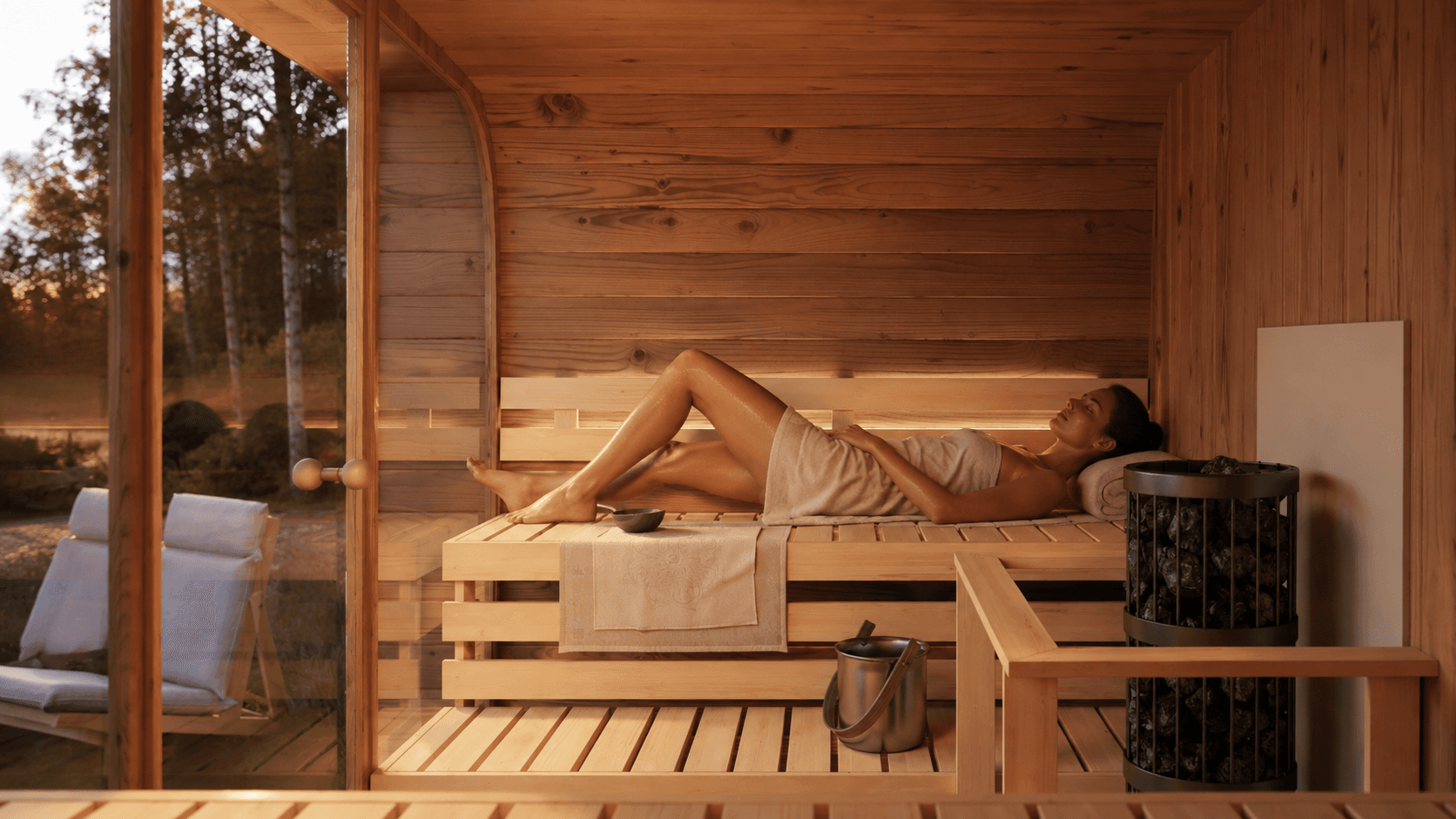
You step into a warm, wooden room. The air smells of wood. You pour water on the stones. You hear that distinctive hiss. Hot steam moves through the room. A few minutes later you step out into the cool air.
And suddenly the world slows down a little.
That's perhaps exactly why sauna culture has survived for centuries.
Science has only relatively recently started closely analysing the sauna's effects on the body. Finns never needed studies to know that you simply feel better after a good session.
Today we're starting to understand why.
How to use the sauna to actually get the benefits?
You don't need to try to survive half an hour at 100°C right away.
This isn't a competition.
For most healthy people, a more sensible approach is to start with shorter sessions and gradually let the body get used to the heat. In a traditional Finnish sauna, temperatures are usually high, but the length of a single session stays relatively short.
The most important thing is paying attention to your own body.
If you start feeling dizzy, nauseous, very weak, or catch yourself thinking "I just need to hold on two more minutes," that's exactly the moment to step out.
The sauna is meant to be a stimulus, not a test of character.
It's also important to keep fluids in mind. During an intense session you can sweat out a significant amount of water, so proper hydration before and after the sauna is essential.
A particularly bad combination, on the other hand, is the sauna and a lot of alcohol. Alcohol impairs judgment, affects the circulatory system, and further increases the risk of dehydration.
Anyone with cardiovascular disease, blood pressure issues, fainting spells or other serious conditions should discuss regular sauna use with a doctor beforehand.
So is it worth using the sauna regularly?
If we look purely at the quality of the scientific evidence, the strongest arguments concern the cardiovascular system. The observations on brain health, respiratory illness, recovery and the broader effects of heat exposure on the body are also very interesting.
On top of that come things that are far harder to measure.
- Looser, more relaxed muscles.
- A moment without your phone.
- A calmer evening.
- Better overall wellbeing.
- That pleasant feeling stepping out into cool air.
- Fresher-looking skin.
And simply a few dozen minutes a week during which you don't have to rush anywhere.
The sauna isn't a miracle cure. It won't replace exercise, healthy eating, sleep or medical treatment.
But that's exactly what makes it so interesting.
It doesn't have to replace anything.
It can be another element of a healthy lifestyle – one that, on one hand, gives the body a genuine physiological stimulus, and on the other, is simply hugely enjoyable.
And there probably aren't many healthy habits that can claim that particular combination.